
Professional development is the backbone of any successful International Baccalaureate (IB) school. According to recent industry analyses, schools that invest in structured, high-intensity training see a measurable increase in student engagement and curriculum fidelity. However, with training programs now spanning over 130 countries, choosing the correct format is a complex logistical challenge. This guide explores how to align your school's specific needs with the right professional development (PD) model.
Understanding PD Categories and Workshop Levels
The IB framework is not monolithic. It consists of distinct programs, each requiring specialized pedagogical knowledge. Professional development is the systematic process of enhancing the skills and knowledge of educators. For schools, this means selecting training that matches the specific curriculum they are implementing.
IBICUS, an authorized provider of IB training, categorizes workshops into several key areas. These include the Diploma Programme (DP), the Middle Years Programme (MYP), and the Career-related Programme (CP). Additionally, there are specialized tracks for Leadership and IB Education (IB Ed). Understanding these categories is the first step in selecting the right format.
For instance, a school transitioning to the MYP needs different training than one preparing for a DP examination cycle. The IB Workshops page on the IBICUS site offers a detailed breakdown of these categories. By aligning your school's strategic goals with the correct program area, you ensure that your investment yields tangible classroom results.
Virtual vs. Face-to-Face: The Delivery Debate
The most significant decision for school administrators is choosing between virtual and face-to-face delivery. This choice impacts budget, staff availability, and learning outcomes.
The Rise of Intensive Virtual Workshops
Since 2021, the landscape of IB training has shifted dramatically. IBICUS converted all workshops to intensive interactive virtual formats delivered via Zoom. This shift was driven by the need for accessibility and continuity during global disruptions. However, the format has remained because of its efficacy.
Virtual workshops are designed to be intensive. They typically run for four hours straight per day with short breaks. This structure forces participants to maintain focus and stay on point. Feedback from schools in the Netherlands, Uganda, and the UAE indicates that this format is often preferred over traditional, spread-out online courses. The intensity mirrors the depth of face-to-face interaction.
The Enduring Value of Face-to-Face Training
Despite the success of virtual models, face-to-face training remains a critical component of professional development. Being in the same room allows for spontaneous collaboration, networking, and deeper interpersonal connections. IBICUS continues to offer a full range of face-to-face workshops in centers around the region, including locations like Dubai and Prague.
For schools that can afford the travel and time away from the classroom, face-to-face training offers a unique community-building experience. It allows educators to step away from their daily routines and immerse themselves fully in the learning process. The About Us page details IBICUS's commitment to maintaining high standards in both delivery modes.
Workshop Levels 1, 2, and 3 Explained
IB training is structured into three distinct levels. Each level serves a different stage of a teacher's journey with the IB curriculum. Selecting the wrong level can lead to redundant training or gaps in knowledge.
Workshop Level 1 is an introduction to the specific IB program. It is designed for teachers who are new to the curriculum. This level covers the foundational philosophy, assessment criteria, and pedagogical approaches. It is essential for schools launching a new program or onboarding new staff.
Workshop Level 2 builds upon the foundations established in Level 1. It delves deeper into subject-specific content and assessment strategies. Teachers who have completed Level 1 or have some experience with the IB should attend Level 2 to refine their practice and address specific challenges.
Workshop Level 3 is for experienced IB educators. It focuses on advanced topics, leadership, and innovation. This level is ideal for coordinators and veteran teachers who want to stay at the forefront of IB pedagogy. It often includes specialized topics like academic integrity or interdisciplinary teaching.
Choosing the correct level requires an honest assessment of your staff's current expertise. A mismatch can result in disengagement or frustration. The Booking portal allows you to filter workshops by level, making it easier to plan your team's development path.
Masterclasses and Specialist Training
For schools with unique needs, standard workshops may not be sufficient. IBICUS offers Masterclasses and Seminars for both IB and non-IB schools. These are shorter, focused sessions that address specific topics in depth.
Examples of Masterclass topics include academic integrity, agency, action, and engagement, and approaches to learning. These sessions are ideal for addressing immediate school-wide challenges or preparing for specific IB evaluations.
Additionally, IBICUS provides specialist training for individual schools. This tailored approach allows schools to request training on specific subjects, such as Arabic A or Biology, or on specific pedagogical frameworks. This flexibility ensures that every school can find a solution that fits its exact context. The Masterclasses page lists upcoming sessions and registration details.
Making the Decision for Your School
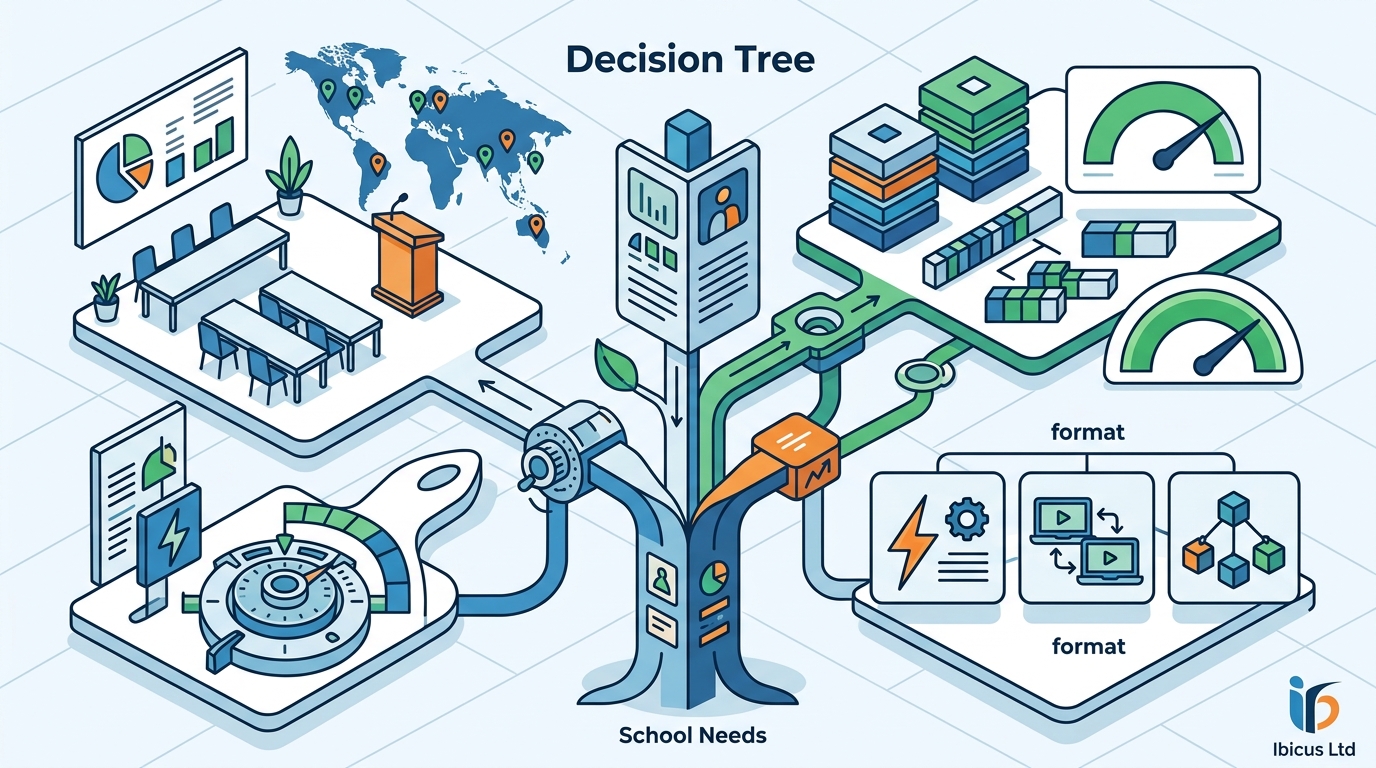
Selecting the right training format requires a strategic approach. Consider the following factors when making your decision.
First, assess your school's current stage. Are you launching a new program or refining an existing one? New programs require Level 1 workshops, while established programs may benefit from Level 3 or Masterclasses.
Second, consider your staff's learning preferences. Some educators thrive in virtual environments, while others need face-to-face interaction. Feedback from IBICUS participants suggests that virtual workshops can be highly interactive if structured correctly. However, face-to-face training offers unparalleled networking opportunities.
Third, evaluate your budget and logistical constraints. Face-to-face training involves travel, accommodation, and time away from the classroom. Virtual training eliminates these costs but requires reliable technology and self-discipline. The Fees page provides transparent pricing for all workshop types.
Finally, think about long-term development. Professional development is not a one-time event. It is a continuous journey. Plan a mix of workshops, Masterclasses, and specialist training to support your staff over time. The Contact Us page is available for schools seeking personalized advice on their training strategy.
Key Takeaways
- IBICUS has been authorized by the IBO to run official PD workshops since 2003, ensuring high-quality training.
- Virtual workshops are intensive, typically running for four hours straight per day, which enhances focus and retention.
- Face-to-face training remains valuable for community building and deep interpersonal connections.
- Workshop Levels 1, 2, and 3 cater to different stages of teacher experience, from novice to expert.
- Masterclasses offer focused training on specific topics like academic integrity and interdisciplinary teaching.
- Specialist training can be tailored to individual school needs, including specific subjects and pedagogical frameworks.
- IBICUS operates in over 130 countries, providing global access to high-quality IB professional development.
Frequently Asked Questions
What is the difference between Level 1 and Level 2 workshops?
Level 1 is an introduction to the IB program for new teachers, while Level 2 builds on that foundation for teachers with some experience.
Are virtual workshops as effective as face-to-face ones?
Many educators find virtual workshops highly effective due to their intensive format and interactive nature, though face-to-face offers unique networking benefits.
Can IBICUS provide training for non-IB schools?
Yes, IBICUS offers Masterclasses and Seminars for non-IB schools that are interested in IB pedagogy.
How do I book a workshop for my school?
You can book workshops through the Booking page on the IBICUS website.
What is the duration of a typical workshop?
Workshops typically run for three days, with intensive sessions each day.
Does IBICUS offer specialist training for specific subjects?
Yes, IBICUS offers specialist training for specific subjects like Biology, Arabic, and more.
How can I contact IBICUS for more information?
You can contact IBICUS via email at admin@ibicus.org.uk or by phone at 0044 (0) 7849 585390.
Book Your Training Today
Investing in the right professional development format is crucial for the success of your IB program. Whether you choose virtual intensity or face-to-face immersion, IBICUS provides the expertise and support your school needs. Explore the IB Workshops catalog today and start planning your team's development journey. For personalized guidance, visit the Contact Us page to speak with the IBICUS team directly.