

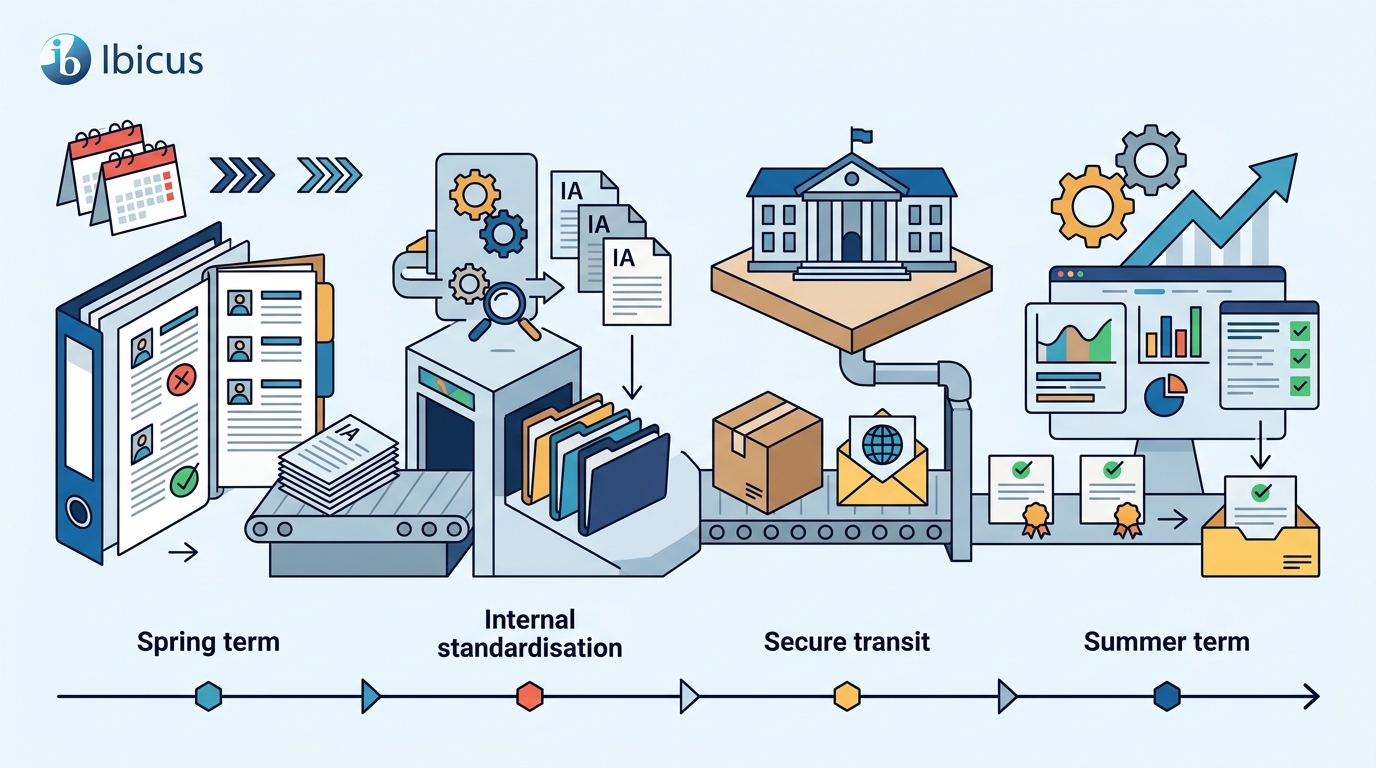
IB Diploma internal assessment moderation is a structured, multi-stage process that ensures consistent and fair grading across schools. The timeline typically spans from the initial student submission in the spring term through to the final IBO moderation results in the summer. Coordinators must manage internal marking, external moderation, and potential adjustments within strict deadlines set by the International Baccalaureate Organization (IBO). This guide outlines the chronological sequence of events, helping coordinators plan their workload effectively.
Phase 1: Student Submission and Initial Marking
The moderation cycle begins with the collection of student work. For most subjects, internal assessments (IA) are submitted to the IBO by a specific deadline, usually in April or May. Before submission, teachers must mark all student work using the official IBO criteria. This initial marking is the foundation of the moderation process. Teachers should ensure that their marking is consistent with the assessment rubrics and that all required components are present. The time required for this phase depends on the class size and the complexity of the subject. For example, a subject like Biology requires a practical investigation, which takes longer to mark than a written essay in English A. Coordinators should build a buffer into their schedule to handle any late submissions or missing components.
Phase 2: Uploading and IBO Moderation
Once internal marking is complete, the coordinator uploads the marked work to the IBO's online portal. The IBO then selects a sample of student work for external moderation. This selection is random but stratified to ensure a representative sample of the grade distribution. The external moderators, who are experienced IB teachers, review the sample and compare the school's marks with their own. This process typically takes several weeks. During this time, the school must wait for the IBO's feedback. The IBO does not provide individual feedback on every piece of work, but they do provide a moderation report that indicates whether the school's marking was consistent with IBO standards. If the school's marks are significantly different from the IBO's, adjustments may be made.
Phase 3: Reviewing Moderation Results and Adjustments
After the IBO completes its review, the coordinator receives the moderation results. This is a critical moment for the school. The results will indicate whether the internal marks have been accepted, adjusted up, adjusted down, or if a full re-mark is required. If adjustments are made, the coordinator must communicate these changes to the students and their parents. This communication should be clear and empathetic, explaining the rationale behind the adjustments. The time required for this phase is relatively short, but the impact on student outcomes can be significant. Coordinators should prepare a communication plan in advance to ensure that all stakeholders are informed promptly and accurately.
Phase 4: Finalizing Grades and Reporting
Once the moderation process is complete, the final grades are locked in. The coordinator must ensure that these grades are accurately reflected in the school's records and reported to the IBO for final processing. This step is crucial for the integrity of the IB Diploma. Any discrepancies at this stage can lead to administrative issues and potential penalties. The coordinator should double-check all data before final submission. The IBO will then issue the final results to the students, usually in July. This final step closes the moderation cycle and allows the school to reflect on the process for future improvement.
Key Takeaways
- Internal assessment moderation is a multi-stage process that begins with student submission and ends with final grade reporting.
- Teachers must mark all student work using official IBO criteria before uploading to the IBO portal.
- The IBO selects a random sample of work for external moderation, which can lead to grade adjustments.
- Coordinators must communicate any grade adjustments to students and parents clearly and promptly.
- Final grades must be accurately recorded and reported to the IBO to ensure the integrity of the Diploma.
- Planning ahead and building buffers into the schedule helps manage the workload and reduce stress.
Frequently Asked Questions
When does the internal assessment moderation process start?
The process starts with the collection and initial marking of student work, typically in the spring term. The exact dates depend on the subject and the IBO's calendar.
How long does the IBO take to moderate the work?
The IBO typically takes several weeks to complete the moderation process. The exact duration can vary depending on the subject and the volume of work.
What happens if the IBO adjusts the grades?
If the IBO adjusts the grades, the coordinator must communicate these changes to the students and parents. The final grades are then locked in and reported to the IBO.
Can teachers appeal the moderation results?
Teachers can request a review of the moderation results if they believe there has been an error. However, this process is limited and must be requested within a specific timeframe.
How can coordinators improve the accuracy of internal marking?
Coordinators can improve accuracy by providing professional development for teachers, such as workshops on assessment criteria and moderation practices. Ibicus offers official IB workshops that focus on assessment and moderation, helping teachers align their marking with IBO standards.
Conclusion
Understanding the step-by-step timeline for internal assessment moderation is essential for IB Diploma coordinators. By planning ahead and following the IBO's guidelines, schools can ensure a smooth and fair process for all students. Contact Ibicus for more information on how to support your teachers in mastering the moderation process.