Professional development for International Baccalaureate educators has evolved significantly over the last two decades. According to recent industry trends in global education, IB professional learning now prioritizes accessibility without compromising pedagogical depth. Schools worldwide must decide between intensive virtual sessions and traditional in-person gatherings. This decision impacts teacher engagement, school budgets, and curriculum implementation speed. Understanding the operational differences is critical for school leaders planning their 2026 and 2027 training calendars. (Ibicus International Baccalaureate IB)
The Evolution of IBICUS Training
IBICUS has been a cornerstone of IB educator support since 2003. Originally established to serve the IB schools community, the organization has maintained authorization from the International Baccalaureate Organisation to deliver official professional development workshops. This long-standing relationship ensures that all content, whether delivered online or in person, aligns strictly with IB standards. (Ibicus International Baccalaureate IB)
The organization operates in over 130 countries, serving a diverse global clientele. This extensive reach necessitates a flexible delivery model. While the core curriculum remains consistent, the method of delivery adapts to the technological and logistical realities of modern education. The transition to hybrid models during the early 2020s accelerated the refinement of their virtual platform, creating a robust alternative to traditional classroom settings. (Ibicus International Baccalaureate IB)
Virtual Workshop Dynamics
Virtual workshops represent the most accessible option for international schools. Delivered via Zoom, these sessions eliminate geographical barriers. Teachers in remote locations can access the same high-quality instruction as those in major educational hubs. This format is particularly effective for specialized subjects where local expertise might be scarce.
Intensive Interactive Format
A defining characteristic of IBICUS virtual workshops is their intensive structure. Sessions typically run for four hours straight per day with short breaks. This design forces focus and minimizes the cognitive load associated with fragmented learning. Participants report that this intensity helps retain complex pedagogical concepts more effectively than spread-out schedules.
Flexibility and Cost Efficiency
For school administrators, virtual training offers significant logistical advantages. There are no travel costs, accommodation fees, or venue rentals. This makes it easier to justify professional development budgets. Additionally, teachers can attend from their home institutions, reducing disruption to their daily routines. The ability to join from anywhere in the world supports the global nature of the IB community.
Face-to-Face Advantages
Despite the rise of digital learning, face-to-face workshops retain a unique value proposition. The physical presence of workshop leaders and peers fosters a collaborative atmosphere that is difficult to replicate digitally. For many educators, the energy of a shared physical space enhances engagement and networking opportunities.
Networking and Community Building
Face-to-face events allow for organic interactions during breaks and meals. These moments often lead to the formation of professional networks that extend beyond the workshop itself. Teachers can exchange resources, discuss challenges, and build relationships that support long-term professional growth. This social component is vital for schools looking to build a strong internal culture of inquiry.
Tactile Learning and Environment
Certain workshops benefit from physical materials and hands-on activities. In-person settings allow for immediate feedback on practical tasks. The change of environment also provides a mental break from daily school pressures, allowing educators to fully immerse themselves in the learning process. This separation is often cited as a key factor in the effectiveness of intensive face-to-face retreats.
Format Comparison Matrix
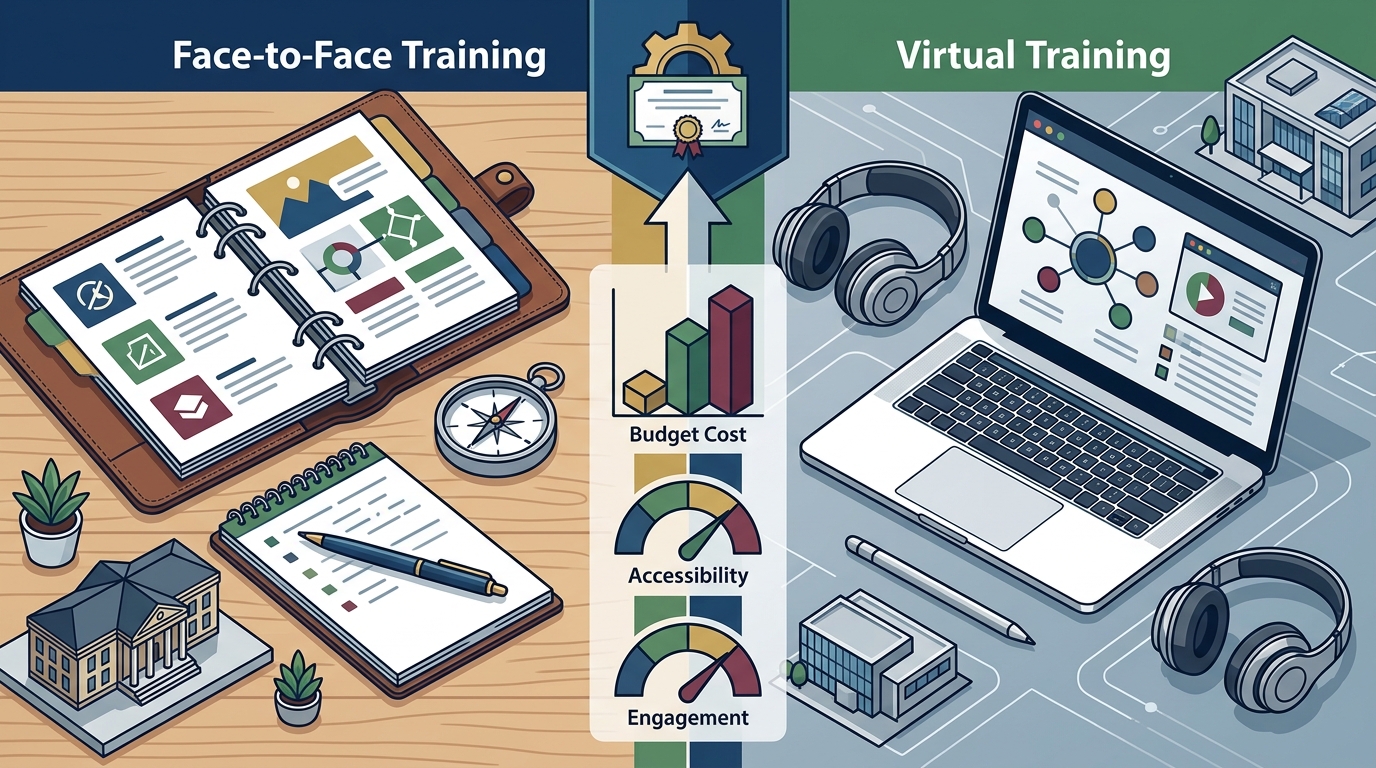
The following table summarizes the key differences between IBICUS virtual and face-to-face workshop options. This data helps school leaders make informed decisions based on their specific needs.
| Feature | Virtual Workshops | Face-to-Face Workshops |
|---|---|---|
| Delivery Platform | Zoom (Intensive 4-hour blocks) | Physical Venue (Regional Centers) |
| Geographic Reach | Global (130+ countries) | Specific Regional Locations (e.g., Dubai, Prague) |
| Cost Efficiency | High (No travel/accommodation) | Lower (Travel and lodging required) |
| Networking | Structured Digital Interaction | Organic In-Person Engagement |
| Focus & Intensity | High (Designed for retention) | High (Immersive Environment) |
| Examples | Virtual DP/CP Workshops | Dubai & Prague Sessions |
Key Takeaways
- IBICUS Authority: IBICUS has been an authorized IB professional development provider since 2003, ensuring curriculum alignment.
- Global Reach: The organization serves schools in over 130 countries, making virtual workshops a critical tool for accessibility.
- Virtual Intensity: Virtual sessions use a 4-hour intensive format to maximize focus and retention, countering typical online fatigue.
- Face-to-Face Value: In-person workshops offer superior networking and tactile learning experiences in locations like Dubai and Prague.
- Hybrid Flexibility: Schools can mix both formats to balance cost efficiency with community building needs.
- Subject Specificity: Certain subjects, such as Arabic A or Biology, may have specific workshop requirements best met by one format over the other.
- Leadership Training: Both formats offer specialized tracks for school leaders, focusing on agency, action, and engagement.
Frequently Asked Questions
Are virtual workshops as effective as face-to-face ones?
Yes. IBICUS virtual workshops are designed to be intensive and interactive. Feedback from teachers in countries like the Netherlands and Uganda indicates that the focused format often leads to high retention rates, comparable to in-person sessions.
What is the typical duration of a workshop?
Most workshops span three days. Virtual sessions run for four hours per day, while face-to-face sessions may vary in daily length but cover the same comprehensive content.
Can I attend a workshop if I am not in the UK?
Absolutely. IBICUS operates globally. Virtual workshops are accessible from anywhere with an internet connection. Face-to-face workshops are held in specific international hubs.
How do I book a workshop?
You can book directly through the IBICUS Booking Portal. The site allows you to filter by program type, such as MYP, DP, or CP, and select your preferred format.
What is the difference between a Workshop and a Masterclass?
Workshops are official IB professional development courses. Masterclasses are specialized seminars often focusing on specific subjects or pedagogical approaches, such as Arabic A or Academic Integrity.
Do you offer training for non-IB schools?
Yes. While originally established for the IB community, IBICUS offers masterclasses and seminars for non-IB schools interested in adopting similar pedagogical frameworks.
What happens after I book a workshop?
After booking, you will receive confirmation and detailed instructions. For virtual workshops, you will receive Zoom links. For face-to-face events, you will receive venue details and logistical information.
Book Your Training
Choosing the right professional development format is a strategic decision for any IB school. Whether you prioritize the global accessibility of virtual sessions or the immersive networking of face-to-face events, IBICUS provides the expertise you need. Explore the full catalog of IB Workshops to find the perfect fit for your team. For personalized advice, contact the IBICUS team directly via email or phone.