
The International Baccalaureate Diploma Programme (DP) is a rigorous pre-university curriculum designed for students aged 16 to 19. According to recent data from the International Baccalaureate Organisation, over 5,500 schools in more than 160 countries offer the DP, with a significant portion of new educators entering this ecosystem annually. For teachers new to the IB, selecting the right subject group is not merely a matter of personal interest but a strategic career decision that impacts workload, student outcomes, and professional growth. This guide analyzes the most accessible and high-demand DP subjects for beginners, leveraging insights from official IB frameworks and professional development standards. (Ibicus International Baccalaureate IB)
Understanding the DP Structure for New Educators
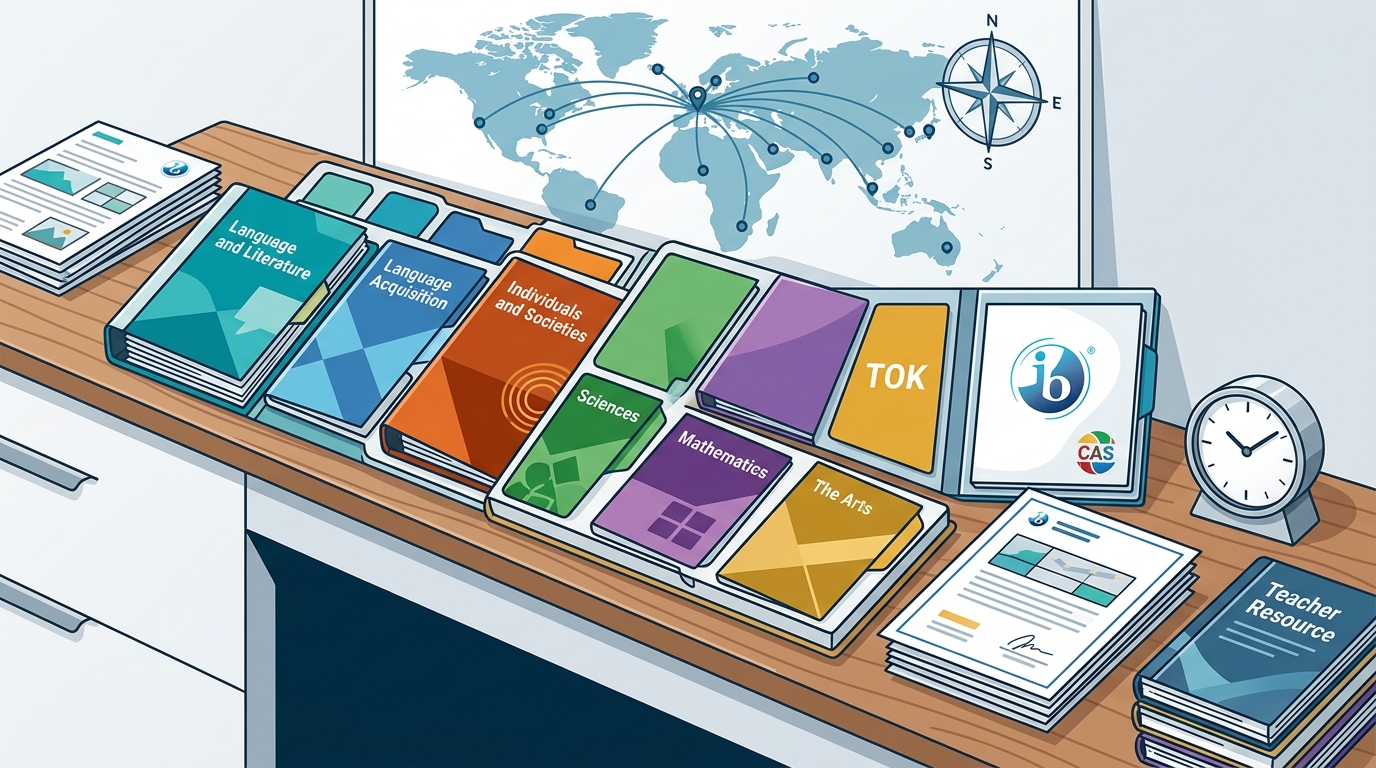
The Diploma Programme is built on six subject groups, requiring students to study one subject from each group. This structure ensures a broad and balanced education. For new teachers, understanding this matrix is critical because it dictates the depth of content knowledge required and the pedagogical approach needed. The IB emphasizes inquiry-based learning, which shifts the teacher's role from a lecturer to a facilitator of critical thinking.
International Baccalaureate schools often seek teachers who can cover core components such as Theory of Knowledge (TOK), the Extended Essay (EE), and Creativity, Activity, Service (CAS). While these are not "subjects" in the traditional sense, they are integral to the DP experience. New teachers should consider how their chosen subject group intersects with these core elements. For instance, science teachers often find natural synergies with the Extended Essay, while language teachers may align closely with TOK discussions on communication and truth.
According to IB organizational reports, schools with strong professional development support see higher retention rates for new faculty. This highlights the importance of choosing a subject group where robust training resources are available. The IB provides a comprehensive framework for each subject, including syllabi, assessment criteria, and past papers. Familiarity with these resources is the first step toward confidence in the classroom.
Group 1: Language and Literature Pathways
Group 1 focuses on a student's best language, typically their native tongue. For new teachers, this group can be challenging due to the high volume of literary analysis required. However, it is also one of the most universally taught groups, meaning there is a wealth of community support and training available.
Language A: Literature is the standard course for students studying their native language. It requires teachers to guide students through complex texts, fostering deep analytical skills. The assessment is heavily weighted toward internal assessment (IA), which involves student-led research and presentation. This offers new teachers a chance to mentor students on independent inquiry, a key IB skill.
For those less confident in literary theory, Language A: Language and Literature offers a broader scope. This course examines how language shapes identity and culture, allowing teachers to incorporate media, advertising, and non-literary texts. This approach can be more accessible for beginners who may feel more comfortable with contemporary or multimodal texts than classical literature.
Training for Group 1 is extensive. IBICUS, an authorized provider of IB professional development, offers specialized workshops on academic integrity and interdisciplinary teaching within this group. These sessions help new teachers navigate the complexities of assessment and ensure they are meeting IB standards from day one.
Group 2: Language Acquisition Opportunities
Group 2 is designed for students learning a second language. This is often the most flexible group for new teachers, particularly those who are bilingual or have a strong background in a specific language. The IB offers a wide range of languages, including Arabic, French, Spanish, Mandarin, and many others.
Language B is the standard course for students who have studied the language for a few years. It focuses on communication skills and cultural understanding. For new teachers, this group is advantageous because the curriculum is structured around clear communicative goals. The internal assessment involves oral interactions, which can be engaging and less daunting than writing extensive essays.
Ab Initio is designed for students with little to no prior knowledge of the language. This course is ideal for teachers who want to work with beginners, mirroring the students' learning journey. It allows educators to build a supportive classroom environment where mistakes are part of the learning process. The syllabus is highly scaffolded, providing new teachers with a clear roadmap for progression.
The demand for Group 2 teachers is high, especially in regions with growing international student populations. According to global education trends, schools are increasingly prioritizing multilingualism. This creates numerous job opportunities for new IB teachers who can teach languages like Arabic or Mandarin, which are often in high demand but short supply of qualified instructors.
Group 3: Individuals and Societies Foundations
Group 3 includes subjects such as History, Geography, Economics, and Global Politics. These subjects are often considered more accessible for new teachers because they rely on factual knowledge and analytical frameworks that are familiar from undergraduate studies. The key to success in this group is mastering the IB-specific approach to historical or geographical inquiry.
Global Politics is a particularly popular choice for new teachers. It is a relatively new subject in the DP, which means there is less saturation in the job market. The curriculum focuses on contemporary political issues, making it highly relevant and engaging for students. For teachers, this subject allows for dynamic classroom discussions and connects directly to current events, which can make lesson planning more intuitive.
Economics is another strong option. It requires a solid understanding of economic theories and their application to real-world scenarios. New teachers often find that their prior academic background in economics translates well to the IB context. The internal assessment in Economics involves writing commentaries on news articles, which helps students develop critical thinking skills while allowing teachers to guide them through complex data analysis.
Training for Group 3 subjects is robust. IBICUS offers workshops on approaches to teaching and learning for DP and CP classroom teachers, which are essential for understanding how to facilitate inquiry in social sciences. These workshops help new teachers move beyond rote memorization and encourage students to think like geographers, historians, or economists.
Group 4: Sciences and Experimental Inquiry
Group 4 consists of Biology, Chemistry, Physics, and Environmental Systems and Societies (ESS). Science teachers must balance theoretical knowledge with practical experimental skills. The IB places a strong emphasis on the scientific method and the internal assessment, which is a substantial piece of independent research.
Biology is a comprehensive subject that covers everything from molecular biology to ecology. New teachers often find it rewarding because of the clear progression of concepts. The internal assessment allows students to design their own experiments, which can be a highlight of the course. However, it requires teachers to be proficient in guiding students through the scientific process, from hypothesis formulation to data analysis.
Chemistry and Physics are more mathematically intensive. They require a strong grasp of underlying principles and the ability to explain complex phenomena clearly. For new teachers with a strong STEM background, these subjects offer a clear path to mastery. The IB provides detailed syllabi and past papers, which are invaluable resources for preparing students for the external exams.
Environmental Systems and Societies (ESS) is an interdisciplinary subject that combines biology and geography with social and economic perspectives. It is often considered more accessible for new teachers because it is less mathematically rigorous than pure sciences. The course focuses on real-world environmental issues, making it highly relevant and engaging. ESS is also unique in that it can be taken as a single subject or as part of a dual award, offering flexibility in how it is taught.
Training for Group 4 is critical due to the practical components. IBICUS offers specialized workshops on biology and chemistry, focusing on the experimental programme and internal assessment. These sessions help new teachers understand how to assess practical skills effectively and ensure that their teaching aligns with IB standards.
Group 5: Mathematics and Analytical Skills
Group 5 includes Mathematics: Analysis and Approaches, and Mathematics: Applications and Interpretation. The choice between these two courses depends on the teacher's comfort with abstract mathematical theory versus practical application.
Mathematics: Analysis and Approaches is a rigorous, proof-based course suitable for students planning to study mathematics, engineering, or physical sciences at university. It requires teachers to have a deep understanding of mathematical theory and the ability to communicate complex proofs clearly. This course is challenging but highly respected in academic circles.
Mathematics: Applications and Interpretation focuses on the application of mathematics in real-world contexts. It emphasizes the use of technology, such as graphing calculators and software, to solve problems. This course is often more accessible for new teachers who may feel more comfortable with applied mathematics than pure theory. It also aligns well with the IB's emphasis on technology and inquiry.
Both courses require teachers to guide students through the internal assessment, which involves a mathematical exploration. This is an opportunity for students to investigate a topic of personal interest using mathematical tools. For new teachers, this can be a rewarding aspect of the course, as it allows for personalized student engagement and mentorship.
Training for Group 5 is essential due to the technical nature of the subject. IBICUS offers workshops on business management and other subjects, but for mathematics, teachers should look for specialized IB workshops that focus on assessment and pedagogical strategies. These workshops help new teachers understand how to support students in developing their mathematical reasoning skills.
Group 6: The Arts and Interdisciplinary Options
Group 6 allows students to study the arts or select a subject from Groups 1-5. The arts include Visual Arts, Music, Theatre, and Film. For new teachers with an artistic background, this group offers a creative and dynamic teaching environment.
Visual Arts is a popular choice because it combines practical studio work with art history and criticism. The internal assessment involves a comparative study and a process portfolio, which allows students to showcase their artistic development. For new teachers, this course offers a chance to mentor students in their creative journey while also teaching them to analyze and critique art.
Music and Theatre are also excellent options for teachers with performance or composition backgrounds. These subjects require teachers to facilitate practical workshops while also guiding students through theoretical analysis. The internal assessment in these subjects often involves performance or composition, which can be highly engaging for both teachers and students.
If a teacher does not have an arts background, they can choose a second subject from Groups 1-5. This is a common strategy for teachers who want to deepen their expertise in a particular area. For example, a science teacher might choose a second science subject to offer a broader range of options to students.
Training for Group 6 is specialized. IBICUS offers masterclasses and seminars for IB and non-IB schools, which can provide valuable insights into teaching the arts. These sessions help new teachers understand how to balance practical and theoretical components effectively.
Key Takeaways for IB Beginners
- IBICUS Authorization: IBICUS has been authorized by the International Baccalaureate Organisation to run official PD workshops since 2003, ensuring high-quality training for new teachers.
- Global Reach: IBICUS organizes teacher training programmes for schools in over 130 countries, providing a vast network of support and resources.
- Virtual and Face-to-Face Options: Since 2021, IBICUS has offered intensive interactive virtual workshops via Zoom, alongside face-to-face options, catering to diverse learning preferences.
- Subject Flexibility: The DP structure allows teachers to choose from six groups, with Group 2 (Language Acquisition) and Group 6 (Arts) often being more accessible for beginners.
- Internal Assessment Focus: All DP subjects require an internal assessment, which is a critical component of the course and a key area for professional development.
- High Demand Areas: Subjects like Global Politics, Environmental Systems and Societies, and languages such as Arabic and Mandarin are in high demand in international schools.
- Professional Growth: Engaging in IB workshops helps new teachers develop the pedagogical skills needed for inquiry-based learning and student-centered instruction.
Frequently Asked Questions
Which IB Diploma subject is easiest for new teachers?
Subjects like Global Politics (Group 3) and Environmental Systems and Societies (Group 4) are often considered more accessible because they are interdisciplinary and focus on contemporary issues rather than deep theoretical mastery. Language B (Group 2) is also a good option for those with a strong language background.
Do I need prior IB experience to teach the Diploma Programme?
No, prior IB experience is not required. However, new teachers are strongly encouraged to attend official IB professional development workshops. Organizations like IBICUS provide authorized training that helps educators understand the IB framework and assessment criteria.
How important is the internal assessment for new teachers?
The internal assessment is crucial as it contributes significantly to the final grade. It requires teachers to guide students through independent research or creative projects. Understanding the assessment criteria is essential for providing effective feedback and support.
What professional development resources are available for IB teachers?
IBICUS offers a range of workshops, masterclasses, and seminars for DP, MYP, and CP teachers. These include face-to-face and virtual options covering topics such as academic integrity, interdisciplinary teaching, and subject-specific strategies.
Can I teach multiple IB subjects?
Yes, many IB teachers teach two subjects. This is common in Group 6, where students can choose a second subject from Groups 1-5. Teaching multiple subjects can increase job opportunities and allow teachers to leverage their diverse expertise.
What is the difference between DP and MYP?
The Diploma Programme (DP) is for students aged 16-19 and is pre-university level. The Middle Years Programme (MYP) is for students aged 11-16 and focuses on broader learning outcomes. Training for each programme is distinct, with specific workshops available for MYP educators.
How does IBICUS support international schools?
IBICUS supports schools in over 130 countries by providing authorized IB workshops and specialist training. They offer tailored programmes for individual schools and collaborate with educational institutions to enhance teaching quality.
Start Your IB Journey
Embarking on a career in the International Baccalaureate Diploma Programme is a rewarding endeavor that offers professional growth and global impact. By choosing the right subject group and engaging in high-quality professional development, new teachers can build confidence and effectiveness in the classroom. IBICUS is committed to supporting educators through its authorized workshops and masterclasses. Visit IBICUS Workshops to explore available training options. For more information on their services, check the About Us page. To book a workshop or inquire about specialist training, contact the team via Contact Us. Explore their Fees page for detailed pricing information. You can also view upcoming events on the Make a Booking portal.